Lifecycle service model

Service & Support You Can Run a Hospital On

Siemens Healthineers service programs are built for clinical operations where imaging suites, diagnostic laboratories, and remote monitoring networks cannot be treated as isolated assets. Each service plan starts with site readiness, proceeds through validated commissioning, and remains accountable through preventive maintenance, cybersecurity updates, clinical application training, parts logistics, and end-of-life decommissioning.

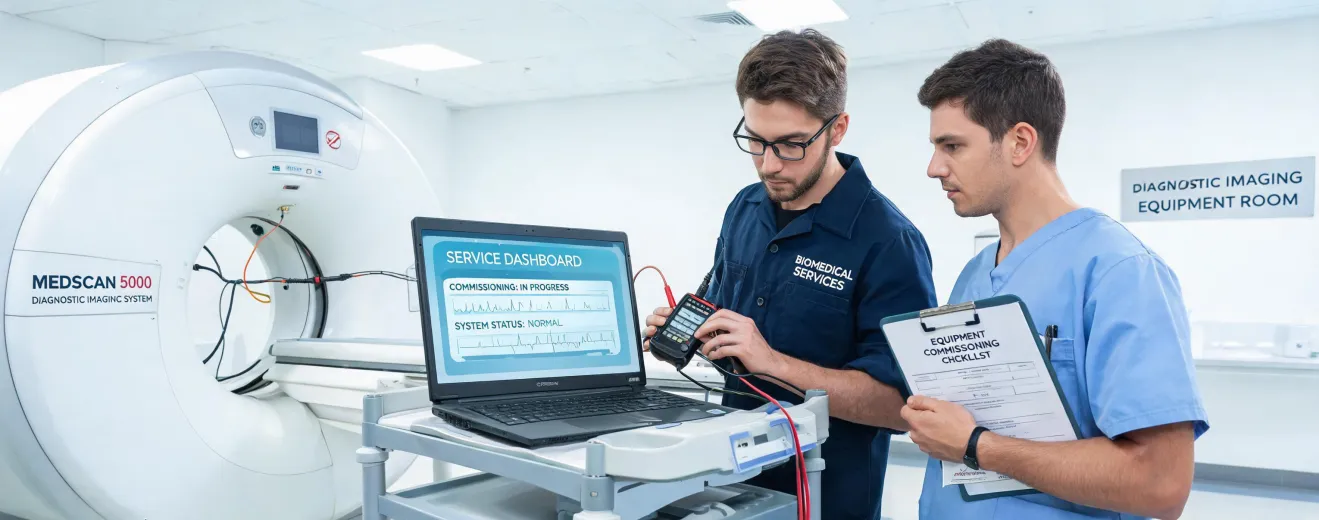
Field service engineer commissioning diagnostic equipment

Installation & IQ/OQ/PQ

Before clinical use, the deployment team documents power, HVAC, shielding, network, calibration, cybersecurity, and user acceptance criteria. Installation Qualification, Operational Qualification, and Performance Qualification records help biomedical engineering and quality leaders connect capital acceptance to regulated evidence rather than informal handoff notes.

Preventive Maintenance

Preventive maintenance is planned around modality risk, utilization, calibration drift, software patch windows, and clinical downtime tolerance. PM records can be prepared for internal audits, accreditation surveys, equipment history review, and replacement planning so long-term service exposure remains visible to hospital leadership.

Field Service & Repair

Service dispatch is organized with Tier 1-3 escalation, OEM parts availability, remote triage, loaner policies, and clinical communication routines. The objective is practical: reduce unresolved downtime while keeping clinicians, biomedical engineering, purchasing, and IT security aligned on root cause and corrective action.

Commissioning timeline

Five steps from site assessment to responsible decommissioning

The process is deliberately documented because hospitals need traceability after installation, not just an installation date.

  1. 01

    Site Assessment

    Power quality, HVAC stability, RF shielding, lead-line requirements, floor loading, network segmentation, equipment pathway, and room readiness are checked before the clinical go-live schedule is committed.

  2. 02

    Install & IQ/OQ/PQ

    Installation, operational, and performance qualification records are completed with calibration references, acceptance criteria, software versions, accessory lists, and responsible sign-off roles.

  3. 03

    Clinical Training

    Application specialists train superusers, biomedical teams, and clinical operators with protocol libraries, user competency checks, alarm behavior, dose or QC review, and escalation rules.

  4. 04

    PM & Calibration

    Preventive maintenance, NIST-traceable calibration, cybersecurity patch deployment, and service history updates are scheduled to reduce unplanned downtime and audit ambiguity.

  5. 05

    End-of-Life

    Decommissioning includes UDI review, data removal aligned to NIST SP 800-88, component recycling documentation, and replacement planning for departments managing multi-year capital cycles.
99.5%Target uptime SLA for covered critical assets
24hOn-site response planning for Tier 1 sites
$12MRegional OEM parts inventory model
1 : 80Field service engineer to asset planning ratio
Service audit

Run a service audit on your installed base.

A service audit compares your current installed base against modality utilization, PM compliance, parts risk, cybersecurity exposure, loaner coverage, and end-of-life timing. It is useful for hospitals preparing a capital committee submission, consolidating service agreements across departments, or replacing legacy imaging and monitoring assets without interrupting clinical schedules.

The audit discussion can include biomedical leadership, modality managers, IT security, supply chain, and clinical applications. Siemens Healthineers will help frame the operational questions that should be answered before an RFP is released.